What is a slam poem?
A "slam poem" is a poem meant to be performed in front of people. All kinds of poems, from haiku to love poems that become songs, can be considered slam poems. All students will write poems that may be performed for the rest of the class at an in-class "slam" -- so we'll call the poem a slam poem.
The only rule (besides no swear words or descriptions of sex or drug or alcohol use) is that it be entertaining for the audience. How do you do that? The same as with anything you write.
1. Say something
2. Be precise and clear and original
3. Use imagery and metaphors
4. Use sound elements like rhythm and rhymes.
What makes a slam poem different is that you gotta perform it! Think of your slam poem of half poem and half entertainment. Therefore slam poems are always memorized, often use funny exaggerations, creative observations, surprise twists, actions, and big emotions like love, anger, and happiness. You might have voices to imitate or places to move.
Slam poems can borrow from reggae or hip-hop styles, and use lots of internal rhymes. They can have a rhythmic flows without a rigid rhyme scheme, and slang (not swearing). The slam poem is usually written as funny with lots of emotions.
Many slam poems contain reflections, fears, and truths. If you can let your reflections and fears, add some humor, and be honest and then say it all outloud using words in a creative, fun, and truth full way you are a real slammer!
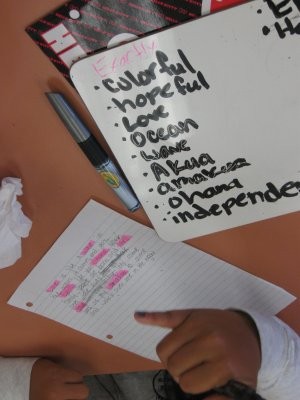
Writing the poem
Select 3 emotions from your moon journal (or 3 emotions that you want to explore)
Select 3 words from the energy word list
Select 3 words from Hawaiian word list
Select 3 words from Science vocabulary
Write these 12 words on your personal whiteboard
Create your poem
by writing a sentence about something you are very passionate about. Weave in
your 12 words where you see fit as your thoughts come together. Write this on a
blank piece of paper. Cross out the words as you use them in your poem. Make
sure your poem
1. Says something
2. is precise, clear, and original
3. uses
images and figurative language
4. uses sound elements like rhythm and rhyme
Now erase your words from your personal whiteboard. Write/reflect on how you feel now that the poem is over. What did you learn by writing this poem. Hand in your poem and whiteboard as your ticket out the door.
This rough draft is awarded 15 points if you have worked on selecting your words and tried to put them all into your poem. The poem will be returned to you during our next meeting. You are to continue to work on your poem so that it meets the following language arts guidelines at a basic, intermediate, or advanced level. The final draft of your poem is due in one week. You will word process your poem, save it in a file on a computer, and on a flash drive. Make sure your name is written at the top of the poem, and that you have given your poem a title.
1. The poem has effective use of vocabulary and figurative language
2. The poem has a clear point of view and idea
3. The poem conveys and captures human emotion and observation
4. The poem uses rhythm and sound
Below are some students writing their poems and getting feedback from the teachers. The students were very proud of their poems and realized that they could take meaningful words and weave them together in a poem. The poems had a lot of emotions. Notice the students wrote their 12 chosen words on a whiteboard and crossed out the words as they were put into the poem. Students highlighted their chosen words in their rough draft so teachers could identify the vocabulary.
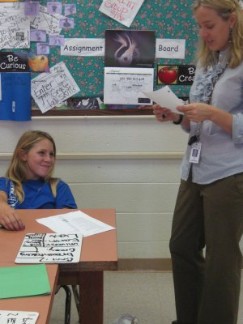
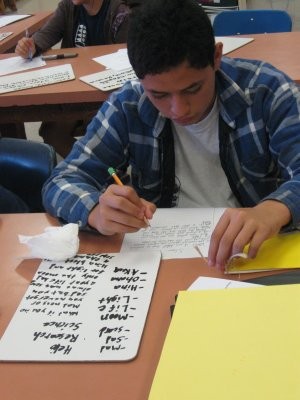
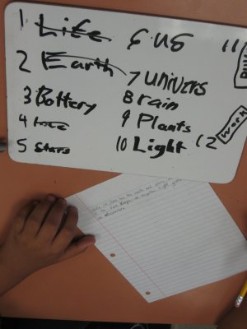
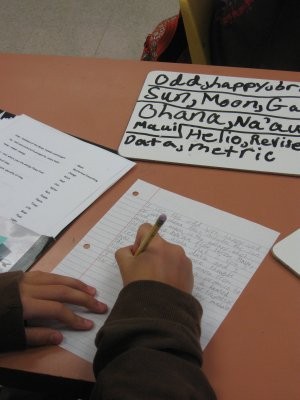
Students were handed back their rough draft of their poem and given two weeks to improve their poem. Some of the poems were really good! Click here to read some poems that met or exceeded the rubric.
The next step was to have the students draw their poem. Click here to see students working on their rough draft of their drawing.
