 | Wow!
What a difference a day makes. I woke up refreshed. The clock said 8 am, my body thought 3 am so I was moving more slowly than normal. Met
about 10 of the fellow HEAs down in the lobby. Walked over to the bus stop and rode it to the Adler Planetarium. This is the center of my universe for the
next two days! |
Monday.
Bus #146 zoomed past the Field Museum. The Shedd Aquarium. We finally
approached, the Adler Planetarium. A big lump in my throat and a huge wash of
good feelings. We all gathered together and talked story,
three groups of teachers over a three year period. Lots of things have occurred
since we last learned, and we reformed those bonds. |  |
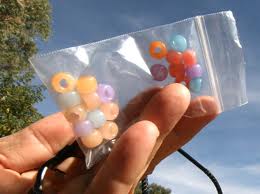 | We practiced self reflection as the day unwound in order to identify and improve our teaching practice. First, with the GEMS Space Science Units. Which were successful learning lessons? Which needed improvement? My problem lesson was quantifying an Inquiry Lab with UV-Sensitive Beads. I love the lab; students love the beads, but quantification is near impossible.
|
So how to improve the
lab? My partner at the table talked about using stop watches to quantify the
amount of time it took for the bead to change color. She had a scale of
quantification that was available through Educational Innovations. Both of
these were fabulous ideas. But the best one came from ME J | 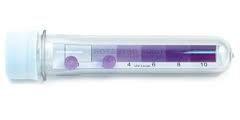 |
 | On
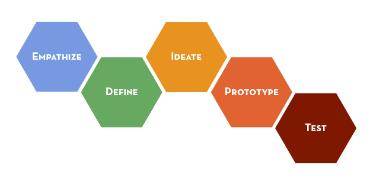
July 5, I attended a PD for the HI STEM RTs on the Engineering Design Process
called Design Thinking. I decided to have teachers use Design Thinking to help
solve the problem of UV bead changing color quantification. |
This process would become a part of the Inquiry Lab. Not only would students (in this case teachers) use the UV sensitive beads to test a hypothesis to practice their understanding of science process, but they would use a design thinking process to create a way to quantify the data. A real STEM moment J
· Empathize-Get to know your problem personally
· Define-What is it exactly what needs be done?
· Ideate-Brainstorm- then narrow the options-Which one is the best fit for the problem?
·
Create
a prototype-What does that look like? Build a model of the solution.
· Test it.
· Present your prototype to the group and solicit feedback. What-cha-gonna-do-about-it?
· Reform the prototype taking feedback into account.
My self-reflection yielded excellent results. This was an Ah HA! Moment for sure.
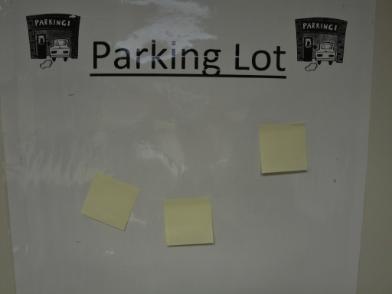
Our next moment of self reflection dwelled upon the Tier Two PD piece. What went well with the PD experience I presented to teachers on Maui two years ago? How did I know it went well? What did I have problems doing? What was my biggest problem? Write it Large and In Charge on a piece of paper and park it on the wall.
|  |
 | Before
long, there were thirty something pieces of paper with large block printing
stuck to the wall and grouped according to a common problem. Each of the
facilitators of our PD led the smaller groups through shared problem solving.
Another facilitator took notes to summarize the groups solutions. We returned
to the larger group and presented out. |
In
each of the reflection sessions for the day, I was able to name at least one
solution gleaned through larger group design thinking. Positive results to
problematic issues! |  |
 | At 5:00 HEAs were dismissed from the Adler to different transports
and told to meet at Pizzerea Due, a landmark Chicago deep dish joint, for a
celebratory reunion. Yum! |
